
A cortisone shot in the knee usually eases pain for a few weeks to a few months. How long it lasts depends on what’s causing the pain, how advanced it is, and how your body responds. Some people get a flare of extra soreness for a day or two before the shot starts to help.
It’s one of the most common injections we give, and one of the most misunderstood. People tend to expect it to fix the knee for good, or to do nothing at all, and the truth sits in between. It can buy you a stretch of time with less pain, so you can walk, sleep and do your exercises again. It’s also part of a bigger plan, which is how we approach knee pain and its treatment options.
How long does a cortisone shot in the knee last?
For most people with knee arthritis, the relief is strongest in the first few weeks and fades from there. A Cochrane review of 27 trials found the benefit was largest one to two weeks after the shot, smaller by about three months, and found no evidence of any effect left at six months.
That’s the average, though, and averages hide a lot. Some people feel better for months. Others notice their knee is easier for a week or two and then it’s back. Knees with milder wear and a lot of swelling often do better than knees that are badly worn, and the shot tends to help more when the joint lining is inflamed.
Expect the timing to go something like this. The numbing medicine in the shot works within minutes and wears off later that day. The steroid itself takes a few days to kick in, so don’t judge the shot by how your knee feels that evening.
What happens during the shot?
It’s a quick office visit. You’ll sit or lie with your knee slightly bent, the skin is cleaned, and a thin needle places a mix of a steroid and a numbing medicine into the joint. If there’s a lot of fluid on the knee, some may be drawn off first, which on its own can make the knee feel less tight.
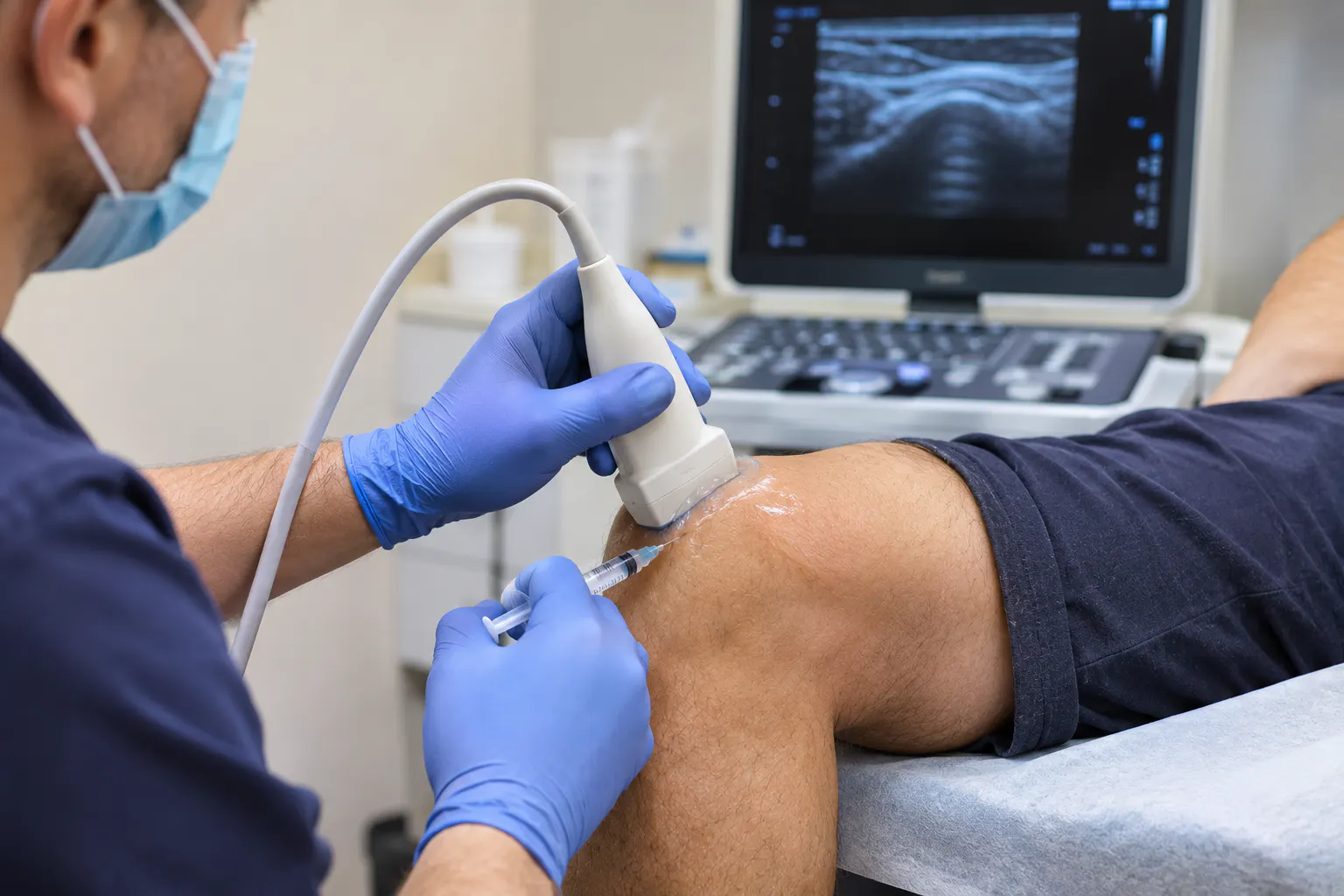
Many knee injections are done with an ultrasound-guided injection, which lets the physician see the needle reach the joint space. That matters most in larger knees or when an earlier shot didn’t seem to land.
Most people walk out on their own and can drive home. Tell us beforehand if you take a blood thinner or have had a fever recently, since either can change the plan for the day.
What should you expect in the first few days?
Go easy on the knee for a day or two. Normal walking around the house is fine, but this isn’t the day for a long hike or yard work.
Some people get a “cortisone flare,” where the knee feels worse for one to two days before the steroid takes effect. It feels discouraging, but it usually settles on its own. An ice pack and rest help.
If you have diabetes, keep a closer eye on your blood sugar. Cortisone can raise it for a few days after the shot. Check more often than usual and call your diabetes care team if your readings run higher than your usual range.
How often can you get a cortisone shot in the knee?
There’s a limit, and it exists for a reason. Steroids injected again and again into the same joint may wear on the cartilage over time, so physicians space them out and cap how many you get in a year.
The strongest evidence comes from a two-year trial in people with knee arthritis. One group got a steroid shot every three months, and the other got saltwater shots on the same schedule. After two years, the steroid group had lost more cartilage, and their knee pain was no better than the saltwater group’s.
So if you find yourself needing a shot every few months just to get by, that’s a sign to step back and look at the bigger picture rather than keep repeating the same fix.
What if it doesn’t help, or wears off fast?
A shot that doesn’t help still tells us something. Because it goes into the joint, good relief in the first hours points to pain coming from inside the knee. If the numbing medicine does nothing, the pain may be coming from outside the joint, such as a tendon, the bursa, or even the hip or back.
If the knee is worn from osteoarthritis, other options include strengthening work, weight management and viscosupplementation, sometimes called gel injections. If pain started with a twist or a pop, an exam and imaging can check for ligament and meniscal tears, which a cortisone shot won’t fix.
Whichever way it goes, keep moving. The weeks of easier pain after a shot are a good window to build strength, and our stretches for knee pain are a gentle place to start.
When should you call your doctor?
Infection after a knee injection is rare, but it needs prompt treatment. Call your doctor the same day, or go to urgent care if the office is closed, if you notice any of these after the first couple of days:
- A knee that gets more swollen, red or hot instead of settling
- Fever or chills
- Pain that keeps getting worse beyond the second or third day
- Trouble putting any weight on the leg
Getting it checked
A cortisone shot does more good as part of a plan built around what’s actually causing your knee pain. That starts with a proper exam, and here’s what to expect at your first appointment.
ReclaimAbility Pain Services sees patients at our Mount Laurel, Haddonfield, Washington Township and Linwood offices. Request an appointment or call 855-727-2465.
Sources
- Jüni P, Hari R, Rutjes AWS, et al. Intra-articular corticosteroid for knee osteoarthritis. Cochrane Database of Systematic Reviews, 2015, Issue 10, CD005328. cochrane.org
- McAlindon TE, LaValley MP, Harvey WF, et al. Effect of intra-articular triamcinolone vs saline on knee cartilage volume and pain in patients with knee osteoarthritis: a randomized clinical trial. JAMA, 2017;317(19):1967-1975. PubMed Central
- American Academy of Orthopaedic Surgeons. Cortisone shot (steroid injection). OrthoInfo. orthoinfo.org
- Mayo Clinic. Cortisone shots. mayoclinic.org
This article is for general education and is not a substitute for a medical evaluation. If you have new or worsening symptoms, talk with a qualified clinician.